717 Newfield St. Middletown, CT 06457



Last Updated: August 10, 2026
Medically Reviewed By:
Dr. John Pavlakis, Cosmetic Dentist
A dental implant is a medical device that is surgically placed into a person’s jaw to restore the ability to chew or improve the appearance of the smile. It replaces both the root and the visible portion of a missing tooth, which is why it tends to feel and function more like a natural tooth than other replacement options. To better understand whether dental implants are right for you, consult our team at Advanced Family & Cosmetic Dentistry Middletown today.
At Advanced Family & Cosmetic Dentistry Middletown, we are proud to offer our patients old school values with the new age results they are looking for from their dentistry practice. We offer a personalized approach to dental health and are happy to treat patients of all ages. If you are considering dental implants, our team of trusted dental staff can ensure you know everything there is to learn about implants and whether you are a good candidate for this type of dental treatment. Please call or schedule online to get in for your complimentary implant consult.
Understanding Dental Implants
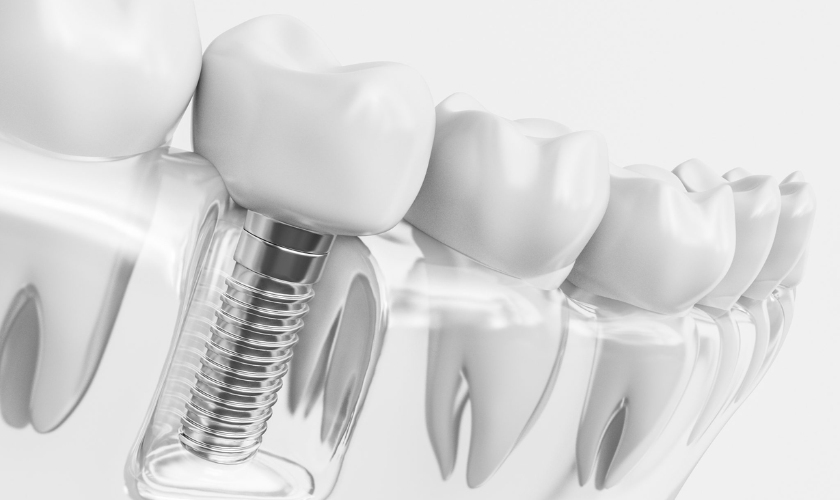
Dental implants are medical devices made from either titanium or ceramic. These posts are inserted into a patient’s jawbone to hold artificial teeth. Implants serve as the roots, providing a strong foundation for permanent or removable replacement teeth. These are made to match your natural teeth and enhance your smile both cosmetically and structurally.
Dental implants are considered more comfortable than dentures, another popular treatment for individuals who need replacement teeth. They also help maintain a patient’s jaw and face shape better than results found with dentures, since a missing tooth root allows the surrounding bone to gradually shrink over time. There are two different types of dental implants that you may have done. These include the following:
Endosteal Implant
Endosteal implants are the most common type of dental implant. They often look similar to a screw, cylinder, or blade implanted in a patient’s jawbone during surgery. These implants can hold one or more prosthetic teeth and are a good option for patients who already have bridges or removable dentures.
Subperiosteal Implant
A subperiosteal implant is placed on top of the jaw rather than inside it. It is installed with posts from a metal framework that sit beneath the gum tissue to hold the patient’s prosthetic teeth. For people who cannot wear removable dentures or do not have enough bone in their jaw to support an endosteal implant, this may be the best option.
A trusted cosmetic dentist can help you decide which form of dental implant may be the best fit for your dental needs.
What Happens During the Implant Process
Getting a dental implant is not a single appointment but a staged process that unfolds over several months. Understanding the general timeline can make the process feel far less unfamiliar.
Placement Surgery
During the surgical appointment, the treated area is numbed with local anesthesia, and sedation is available for patients who want additional comfort. Your dentist creates a small opening in the gum tissue, prepares the jawbone, and places the implant post. In many cases, a temporary tooth can be placed the same day so you are not left with a visible gap while you heal.
Healing and Osseointegration
After placement, the jawbone gradually fuses to the surface of the implant in a process called osseointegration. This is what gives an implant its long-term stability, and it typically takes anywhere from three to six months depending on the individual and the location in the mouth. This healing period is the reason implant treatment takes longer than other tooth replacement options, but it is also why implants tend to last for decades with proper care.
Abutment and Final Restoration
Once healing is complete, a small connector piece called an abutment is attached to the implant, and your permanent crown, bridge, or denture is fitted on top. This final step usually takes place over one or two shorter appointments.
Are You a Good Candidate for Dental Implants?
Most healthy adults with one or more missing teeth are candidates for dental implants, but a few factors affect whether the process can move forward as planned. Your jawbone needs enough density and volume to support the implant, though a bone graft can often address this if bone loss has already occurred. Healthy gum tissue free of active periodontal disease is also important, since gum disease can interfere with healing. Certain habits and health conditions, including smoking and uncontrolled diabetes, can slow healing and affect long-term success, so your dentist will review your full medical history before recommending treatment. A consultation is the most reliable way to know where you stand, since imaging and a clinical exam reveal details that are not obvious from the outside.
What Are the Benefits of Getting Dental Implants?
When considering dental implants, there are many reasons to consider this treatment. Some of the benefits patients experience when getting dental implants include the following:
- Chewing: Because dental implants are fixed in your jaw, it is easier to chew and eat with confidence that your implants will not move. This also spreads out chewing forces more evenly, which protects the implant as well as your natural teeth.
- Bone preservation: The implant is surgically placed in your bone, which greatly reduces the bone loss that occurs with missing teeth or traditional dentures.
- Talking: Dental implants allow you to speak without the slipping that some patients experience with dentures.
- Comfort: Implants stay rooted in one location rather than shifting on top of the gums.
- Oral health: Implants allow easier access between teeth, making it simpler to floss and maintain your routine dental care.
- Appearance: Crowns that fit over your implant are made to look like natural teeth, improving your smile and helping build your overall confidence.
- Durability: Implants can last a lifetime for patients who keep up with their dental hygiene and routine checkups.
- Jawbone protection: Because implants are anchored into the jaw like natural tooth roots, they help stabilize the bone and prevent the gradual bone loss that follows tooth loss.
For more details regarding the benefits of dental implants, schedule an appointment with a trusted dental team in Middletown today.
Understanding the Risks and What to Expect During Recovery
Dental implants have a strong long-term success rate, but like any surgical procedure, they carry some risk that is worth understanding before treatment begins. Possible complications can include infection at the implant site, minor nerve irritation, or, in rare cases, the implant failing to fully bond with the bone. Most of these risks are minimized through careful planning, imaging, and a thorough review of your health history beforehand. Immediately after surgery, mild swelling, tenderness, and bruising are common and generally improve within a week. Your dentist will provide specific aftercare instructions, and keeping up with follow-up visits allows any concerns to be caught and addressed early.
Advanced Family & Cosmetic Dentistry Middletown
If you’re considering dental implants, we at Advanced Family & Cosmetic Dentistry can provide you with the personalized care and comprehensive information you need. Our team, led by Dr. John Pavlakis, combines old-school values with state-of-the-art dental solutions to ensure you receive the best possible care. We prioritize your comfort and satisfaction, taking the time to address any questions or concerns you may have. If you would like to read more about long-term outcomes, our post on how long dental implants actually last covers what affects their lifespan.
Our services include a wide range of dental treatments, from gentle teeth cleanings to advanced cosmetic procedures. We’re committed to making your visit pleasant and informative. Whether you need dental implants or other dental care, trust us to deliver the results you desire. Call us today at (860) 347-1227 or visit our contact form.
Frequently Asked Questions About Dental Implants
How do I know if I need a dental implant?
A dental implant may be recommended if you have one or more missing teeth and want a permanent, natural-feeling replacement rather than a removable option. A consultation with imaging and a clinical exam is the most reliable way to determine whether an implant is right for your situation.
How long does the dental implant process take from start to finish?
The full process typically spans three to six months or longer, mostly due to the healing time needed for the jawbone to fuse with the implant. Placement surgery and the final restoration are each relatively short appointments, with healing time in between.
Can I get a dental implant if I have bone loss?
Bone loss does not automatically rule out dental implants. A bone graft can often rebuild enough volume and density to support an implant, and your dentist can evaluate this during a consultation with imaging.
Is getting a dental implant painful?
Placement surgery is performed under local anesthesia, with sedation available for added comfort, so patients typically do not feel pain during the procedure. Mild soreness, swelling, or bruising afterward is common and generally improves within about a week.
What happens if a dental implant fails to bond with the jawbone?
Implant failure is uncommon but can happen, particularly in patients who smoke or have uncontrolled health conditions that affect healing. When it does occur, the implant can often be removed and replaced once the underlying cause is addressed.

Dr. John Pavlakis | Cosmetic Dentist
Dr. John Pavlakis, a graduate of the University at Buffalo School of Dental Medicine, brings years of expertise and a commitment to patient-centered care. Staying at the forefront of dental advancements, he is an active member of leading dental organizations. Known for his compassionate approach, Dr. Pavlakis ensures patients feel heard and comfortable, providing top-tier cosmetic and general dentistry at Advanced Family & Cosmetic Dentistry in Middletown, CT.