717 Newfield St. Middletown, CT 06457



Last Updated: July 29, 2026
Medically Reviewed By:
Dr. John Pavlakis, Cosmetic Dentist
Root canal therapy has long been surrounded by fear and misinformation. Many people associate the procedure with extreme pain, a long recovery, and a higher risk of future dental problems, and these beliefs are largely outdated and do not reflect how root canal treatment actually works today. In reality, a root canal is designed to relieve pain caused by infection, not to create it, and understanding the facts can help you make a more informed decision about your dental health.
At Advanced Family & Cosmetic Dentistry, we want every patient to have accurate, reassuring information about the procedures we recommend. If you have been putting off a root canal because of fear or uncertainty, our team, including Dr. John Pavlakis, is here to walk you through what the treatment really involves and why it is often the best way to protect a tooth that has been damaged by decay or infection.
Myth #1: Root Canals Are Extremely Painful
One of the most common misconceptions about root canal treatment is that it is excruciating. This belief likely comes from outdated techniques or stories passed down from decades ago, long before modern anesthesia and instrumentation existed. Today’s root canal therapy is designed to be as comfortable as possible, and most patients describe the experience as feeling similar to getting a routine filling.
During a root canal, your dentist removes infected or damaged tissue from inside the tooth, which eliminates the source of the pain rather than adding to it. Local anesthesia keeps the area numb throughout treatment, and for patients who feel anxious about dental visits in general, our sedation dentistry options can help you stay relaxed and comfortable from start to finish.
Mild soreness can follow once the anesthesia wears off, but over-the-counter pain relievers usually manage it well, and any lingering discomfort typically fades within a few days. Avoiding a root canal that your tooth actually needs tends to lead to more pain later, not less, since an untreated infection generally continues to worsen over time rather than resolving on its own.
Myth #2: It Is Better to Pull the Tooth Than Get a Root Canal
Another common myth is that extracting a tooth is a simpler or better choice than root canal therapy. While extraction is sometimes necessary, dentists generally try to save your natural tooth whenever the remaining structure allows for it. Keeping your natural tooth helps you chew normally, keeps neighboring teeth from shifting out of position, and helps maintain the bone structure that supports your jaw over time.
A root canal treats the infection while keeping the tooth in place and functional. Extraction, by contrast, usually calls for a replacement such as a dental implant, bridge, or denture, each of which adds cost, time, and additional healing on top of the extraction itself. Replacing a missing tooth is generally more involved and can take longer to fully resolve than completing a root canal on the tooth you already have.
Unless a tooth is too damaged to restore, root canal therapy tends to be the option that protects your long-term oral health best. A properly treated and restored tooth can last for many years with routine care, which often makes it the more practical choice when compared with tooth extraction and the replacement process that follows it.
Myth #3: Root Canals Cause Illness
Some patients worry that a root canal can contribute to illness elsewhere in the body. This idea traces back to a poorly designed, decades-old study that modern dentistry has since debunked. The American Association of Endodontists confirms that root canal treatment does not increase a patient’s risk of disease and that no credible scientific evidence links the procedure to health problems outside the tooth, a point the organization addresses directly for patients who come across this claim online.
A root canal actually reduces risk by removing an active infection from inside the tooth before it has a chance to spread further. Left untreated, that same infection can progress into an abscess, cause swelling, and in some cases lead to more serious complications. Treating the tooth promptly, rather than avoiding treatment out of concern for your overall health, is what actually protects it.
Once the canal is cleaned, sealed, and restored, reinfection is uncommon. Keeping up with brushing, flossing, and regular dental visits after treatment helps the restored tooth, and the rest of your mouth, stay healthy for years to come.
Myth #4: Root Canal Recovery Takes a Long Time
Many people assume that recovering from a root canal takes weeks. In practice, most patients return to their normal routine within a day or two. The treated tooth may feel sensitive for a short stretch afterward, but this typically eases quickly as the area heals and the local anesthesia fully wears off.
Compared with an extraction, which often requires more healing time plus a separate procedure for replacing the tooth, a root canal is far less disruptive to your schedule. We put together a closer look at what to expect during your first week after a root canal if you want a day-by-day sense of what normal healing looks like versus symptoms that are worth a call to our office.
A crown is often placed over the treated tooth once healing allows, restoring its strength for everyday chewing. With routine dental visits and good home care, a root canal-treated tooth can continue functioning much like the rest of your natural teeth for many years.
Myth #5: A Root Canal Removes the Roots of Your Tooth
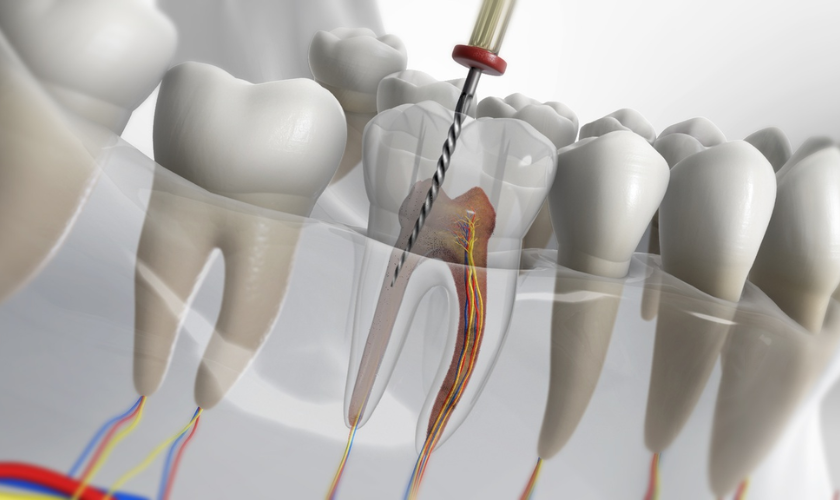
Despite the name, root canal treatment does not remove your tooth’s roots. The canal in the name refers to the narrow passageways inside the root that house the tooth’s pulp, the soft tissue containing nerves and blood vessels. During treatment, your dentist removes only this inflamed or infected pulp tissue and then cleans, shapes, and seals the empty canal.
The root structure itself stays exactly where it is, anchoring the tooth securely to your jawbone. Removing the roots would actually work against the goal of the procedure, since they are what keep your restored tooth stable and functional once treatment is complete.
Myth #6: You Only Need a Root Canal If Your Tooth Hurts
It is easy to assume that a pain-free tooth is automatically a healthy one, but infection inside the pulp does not always cause noticeable discomfort. Some infections develop slowly enough that the surrounding nerve stops signaling pain long before the underlying problem resolves on its own, which means damage can continue even without symptoms you would notice at home.
This is one of the reasons routine dental exams and digital imaging matter, even when nothing seems wrong. Your dentist can often spot early signs of infection, such as changes visible on an X-ray or subtle discoloration of a single tooth, well before the tooth ever starts to hurt.
Signs You May Need a Root Canal
While some infections stay quiet, many produce symptoms that are worth paying attention to. If you notice any of the following, it is worth having your tooth evaluated by a dentist:
- Sharp or lingering pain when biting down or chewing
- Sensitivity to hot or cold that continues well after the temperature trigger is gone
- Swelling, tenderness, or a small pimple-like bump on the gums near a tooth
- Noticeable darkening or discoloration of a single tooth
- A cracked, chipped, or visibly decayed tooth that has not been treated
If any of this sounds familiar, our post on what causes biting pain after a root canal can help you tell the difference between normal healing and something that needs attention. Even without symptoms, a routine exam remains the most reliable way to catch a problem early.
Waiting on any of these signs rarely makes a tooth better on its own. Delaying care generally gives an infection more time to spread through the pulp and, eventually, into the bone around the root, which can turn a straightforward root canal into a more complicated treatment. Scheduling an evaluation as soon as you notice a change gives you and your dentist the most options for keeping the tooth healthy and intact.
Why Choose Advanced Family & Cosmetic Dentistry for Your Root Canal
A root canal can feel intimidating before you understand what is actually involved, which is exactly why our office relies on current technology and techniques to keep treatment efficient and comfortable. We take time to walk you through each step so you know what to expect before, during, and after your visit, and we welcome questions at any point along the way. For patients who need care quickly, our same-day dental care options can help get you out of pain sooner rather than later.
We also know that dental anxiety is common, and we build our approach around patients who feel nervous about treatment, not just those who feel comfortable in the chair. Clear communication, a calm environment, and modern anesthesia techniques all play a role in making a root canal feel far more manageable than the myths suggest.
Our team, led by Dr. John Pavlakis, is committed to helping you keep your natural teeth whenever possible while prioritizing your comfort throughout treatment. If you think you may need a root canal or simply have questions about your options, reach out through our contact form or request an appointment with our Middletown, Connecticut office.
Frequently Asked Questions About Root Canal Myths
How Long Does a Root Canal Procedure Take?
Most root canal appointments take between 45 and 90 minutes, depending on which tooth is involved and how complex the infection is. Front teeth with a single canal tend to move faster than molars, which have more canals to clean and shape. Your dentist can give you a more specific estimate once your tooth has been examined and any imaging has been reviewed, and most patients complete treatment in a single visit rather than needing to return multiple times.
Will I Need a Crown After My Root Canal?
In most cases, yes, especially for molars and premolars that handle significant chewing force. Once the tooth has healed enough after treatment, a crown restores its strength and protects it from cracking under everyday pressure. Front teeth with less bite force sometimes only need a filling, but your dentist will recommend the option that best protects the tooth over the long term based on how much natural structure remains.
How Does the Cost of a Root Canal Compare to Extraction and Replacement?
A root canal often costs less overall than extracting a tooth and replacing it, since extraction typically leads to a follow-up procedure such as an implant, bridge, or partial denture. Those replacement options add both time and expense on top of the extraction itself. Saving your natural tooth with a root canal, followed by a crown if needed, is frequently the more cost-effective path once you factor in the full treatment your tooth would otherwise require.
Can a Tooth That Has Had a Root Canal Get Reinfected?
It is uncommon, but reinfection can happen if new decay reaches the restored tooth, if a crown or filling develops a gap, or if a canal was not fully sealed during the original treatment. Symptoms such as renewed pain, swelling, or sensitivity are worth having evaluated promptly. In many cases, a retreatment can address the issue and save the tooth again, so reinfection does not automatically mean the tooth needs to be extracted.
What Should I Eat After a Root Canal?
Soft foods are the safest choice for the first day or two, since the tooth may still feel tender and any numbness from anesthesia needs to wear off before you eat. Options such as soup, yogurt, eggs, and mashed vegetables are easy on a healing tooth. Chewing on the opposite side of your mouth and avoiding hard, sticky, or very crunchy foods until any sensitivity resolves helps protect the tooth while it settles after treatment.

Dr. John Pavlakis | Cosmetic Dentist
Dr. John Pavlakis, a graduate of the University at Buffalo School of Dental Medicine, brings years of expertise and a commitment to patient-centered care. Staying at the forefront of dental advancements, he is an active member of leading dental organizations. Known for his compassionate approach, Dr. Pavlakis ensures patients feel heard and comfortable, providing top-tier cosmetic and general dentistry at Advanced Family & Cosmetic Dentistry in Middletown, CT.