717 Newfield St. Middletown, CT 06457


Last Updated: July 29, 2026
Medically Reviewed By:
Dr. John Pavlakis, Cosmetic Dentist
Modern dentistry has undergone a remarkable transformation through technological advancements that shape diagnosis, treatment planning, and patient outcomes. The integration of digital tools creates a level of precision that was not possible a generation ago, while significantly improving comfort and efficiency for those in the dental chair.
We recently spoke with Dr. John Pavlakis of Advanced Family & Cosmetic Dentistry about his approach to incorporating current technology. His practice carefully evaluates and implements dental innovations that genuinely enhance patient care rather than simply adopting every new tool that enters the market.
Prioritizing Patient Education Through Technology
Technology in Dr. Pavlakis’ practice serves a purpose beyond treatment delivery, becoming a powerful educational tool that helps patients understand their oral health conditions and treatment options.
“The technology is the best way to show the patients and educate them enough to make the decision of what they want,” Dr. Pavlakis explains. “With technology, you can show detailed aspects of their oral health that they’ll never see before.”
This educational approach reshapes the traditional dentist-patient dynamic. Rather than simply telling patients what they need, Dr. Pavlakis uses technology to give patients a visual understanding that guides more informed decisions. Instead of taking a recommendation on faith, you get to see the same image your dentist is looking at and ask questions about what it shows.
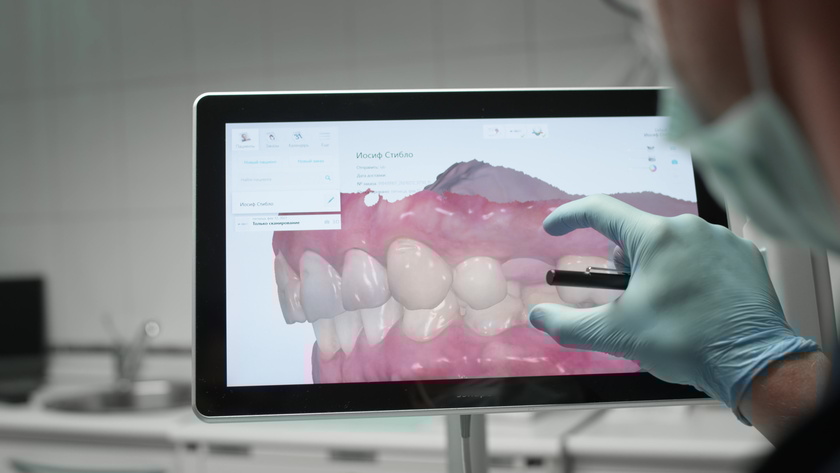
“When scanning their teeth, I can show them the ‘tongue’s eye view,’ which reveals how the upper and lower teeth come together,” he notes. “If the alignment isn’t correct or the contact is too high, that won’t provide good long-term results.”
The 3D Revolution in Treatment Planning
Among the many technological advances in dentistry, Dr. Pavlakis highlights three-dimensional imaging as particularly transformative for comprehensive treatment planning.
“I would say our CBCT is amazing because it really brings in the three-dimensional aspect of the roots, the bones, and the teeth,” Dr. Pavlakis shares. “I’m really most excited about the 3D x-rays because that’s how you get the good foundation.”
This technology allows for precise visualization of oral structures that traditional two-dimensional imaging cannot capture. The result is treatment planning that accounts for every anatomical consideration.
“Without this comprehensive view, simply changing the teeth’s appearance won’t help with function and it’s not going to last,” he adds. “Patients won’t be happy in the long run.”
Other Digital Tools Shaping Dental Care Today
Beyond CBCT imaging, several other categories of technology have become common in general dentistry over the past decade. Digital X-rays use significantly less radiation than older film-based systems while producing an image almost instantly, which speeds up diagnosis without adding exposure. Intraoral cameras, similar to the scanning tool Dr. Pavlakis describes above, let your dentist show you a live, magnified view of a specific tooth or area of concern rather than asking you to picture it from a verbal description alone.
CAD/CAM systems, which combine digital design software with an in-office milling unit, allow some restorations to be designed and produced during a single visit rather than requiring a temporary crown and a return trip weeks later. The American Dental Association tracks these categories of digital dentistry closely as adoption continues to grow across general and specialty practices. Our same-day CEREC restorations are one example of this kind of technology in use at our office, and our technology page covers the broader set of tools we rely on day to day.
Digital workflow also changes how information moves between your dentist and any specialists involved in your care. A digital scan or set of images can be sent electronically to an oral surgeon, orthodontist, or dental lab in moments, compared with mailing physical models or films back and forth. For patients, that generally means fewer delays between when a treatment is planned and when it actually gets underway.
Comfort-Focused Technology for Anxious Patients
Not every meaningful advance in dentistry is about imaging or restorations. Some of the most appreciated technology addresses comfort directly. Soft-tissue lasers, for example, are used for certain gum procedures with less bleeding and a shorter recovery than older methods, which can make a real difference for patients who feel anxious about dental visits in general.
Digital tools also support better communication before treatment even begins. Being able to see a scan or image of your own tooth, rather than relying on a verbal explanation alone, tends to reduce uncertainty about what a recommended procedure actually involves. For patients who need extra support to feel at ease, pairing this kind of visual explanation with our sedation dentistry options can make even a more involved procedure feel manageable.
Technology That Stands the Test of Time
In a field where new devices emerge constantly, Dr. Pavlakis takes a measured approach to adopting technology. His practice focuses on tools that demonstrably improve patient outcomes rather than novelties with limited clinical value.
“I think that was more an issue earlier in my career,” Dr. Pavlakis reflects when asked about distinguishing between impactful technology and passing trends. “Now, there’s not much we don’t have or more than what we need, so we have exactly what we need.”
His evaluation process involves considerable due diligence. “It just comes with education, study clubs, continuing education, experience, and the reps, other doctors that are doing it,” he says. “It’s really important to work together as a team.”
That kind of vetting matters because not every product marketed to dental practices holds up in daily use. A tool that looks impressive in a manufacturer demonstration does not always translate into a better outcome for the patient sitting in the chair. Talking with colleagues who have already used a particular system for a year or more, rather than relying only on a sales presentation, tends to give a more honest picture of how a technology performs over time.
The Human Element Remains Essential
Despite embracing current technology, Dr. Pavlakis emphasizes that human skill and craftsmanship remain irreplaceable parts of great dental care. This philosophy is particularly evident in his approach to smile design.
“When creating wax-ups for smile makeovers, we’re not using AI or robots,” he says. “It’s a human matching their facial profile and their teeth and melting wax and literally carving. That’s what you need because humans will be looking at humans.”
This blend of technology with human artistry allows for results that meet both clinical standards and aesthetic expectations, rather than relying on software alone to make judgment calls that still benefit from a trained eye.
Creating a Technology-Enhanced Patient Experience
Beyond diagnostic capabilities, technology in Dr. Pavlakis’ practice significantly enhances the overall patient experience. Digital systems streamline workflow and communication between the practice, outside specialists, and dental laboratories.
“We’re in it for the long haul,” Dr. Pavlakis emphasizes. “We want patients to be happy the day we deliver, where they’re crying and hugging and just love life. But we also want them to be happy 20, 30 years later.”
This long-term perspective guides every technology decision at the practice, ensuring that immediate benefits lead to lasting results rather than a quick fix that needs revisiting a few years down the road.
That same emphasis on continuity extends to how records and images are stored and shared over time. Digital charts, scans, and X-rays make it easier to compare your current oral health against records from years earlier, which can help your dentist spot gradual changes, such as slow bone loss or shifting bite patterns, that might be harder to notice from a single visit alone.
Experience Our Technology-Enhanced Approach
At Advanced Family & Cosmetic Dentistry, we carefully integrate current technology with hands-on skill to provide precise, efficient, and comfortable dental treatments. Our approach focuses on tools that genuinely enhance your care experience and treatment outcomes.
Discover how our thoughtful implementation of dental technology can make your visits more informative, comfortable, and effective. Reach out through our contact form or request an appointment to schedule your visit.
Frequently Asked Questions About Modern Dental Technology
Is a CBCT Scan Safe, and How Is It Different From a Regular X-Ray?
A CBCT scan uses a low-dose form of digital X-ray technology to create a three-dimensional image of your teeth, jaw, and surrounding bone rather than the flat, two-dimensional image a standard X-ray provides. It is typically reserved for cases that benefit from a fuller picture, such as implant planning or evaluating root and bone structure in detail. Your dentist will only recommend one when the added information will meaningfully change or confirm your treatment plan.
What Is an Intraoral Scanner, and Does It Replace Traditional Impressions?
An intraoral scanner is a small wand-like camera that captures a digital, three-dimensional model of your teeth in a few minutes, in place of the putty-filled trays used for traditional impressions. Most patients find it more comfortable, since there is no messy material to bite down on or wait to set. The digital file can also be shared instantly with a lab or specialist, which can help shorten the time between visits for certain restorations.
Can Same-Day Crowns Really Be Completed in One Visit?
Yes, in many cases. CAD/CAM technology allows a dentist to design a crown digitally from a scan of your tooth and mill it from a solid ceramic block in the office the same day, rather than sending an impression out to a lab and having you return weeks later for a permanent crown. Not every case is a candidate for a same-day restoration, so your dentist will let you know whether your specific tooth and bite are a good fit for this approach.
How Often Does Dental Technology Get Updated at Your Practice?
Rather than following a fixed schedule, our practice evaluates new technology as it becomes available and adopts tools that offer a clear, demonstrated benefit to patient care. This evaluation draws on continuing education, study clubs, and conversations with other dentists who are already using a given technology, so a new tool has to prove its value before it becomes part of everyday treatment rather than being added simply because it is new.
Does More Advanced Technology Mean a More Expensive Visit?
Not necessarily. Many digital tools, such as intraoral scanners and digital X-rays, are used as part of routine exams and diagnostics at no separate cost to you. Technology that supports a specific procedure, such as CAD/CAM same-day restorations, is typically factored into the cost of that treatment rather than billed as an add-on. We are happy to walk through costs during your consultation so there are no surprises.
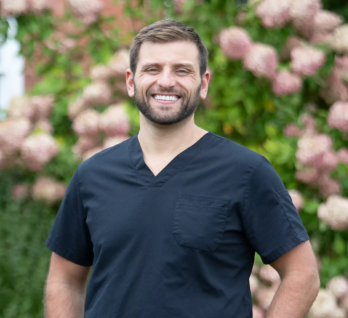
Dr. John Pavlakis | Cosmetic Dentist
Dr. John Pavlakis, a graduate of the University at Buffalo School of Dental Medicine, brings years of expertise and a commitment to patient-centered care. Staying at the forefront of dental advancements, he is an active member of leading dental organizations. Known for his compassionate approach, Dr. Pavlakis ensures patients feel heard and comfortable, providing top-tier cosmetic and general dentistry at Advanced Family & Cosmetic Dentistry in Middletown, CT.